
When I Heard Frogs For The First Time: Building Community Stewardship Along the Soet River
Author/s: Curen Fortuin
Urban rivers are often viewed as environmental assets but they are equally shaped by the communities that surround them. Where pollution, illegal dumping and deteriorating public spaces become the norm, rivers can quickly become disconnected from everyday community life. Restoring these environments needs more than environmental rehabilitation. It depends on local ownership, practical solutions and partnerships that recognise the relationship between people and place. This is the story of how local partnerships are transforming an urban river through active citizenship and place-based stewardship.
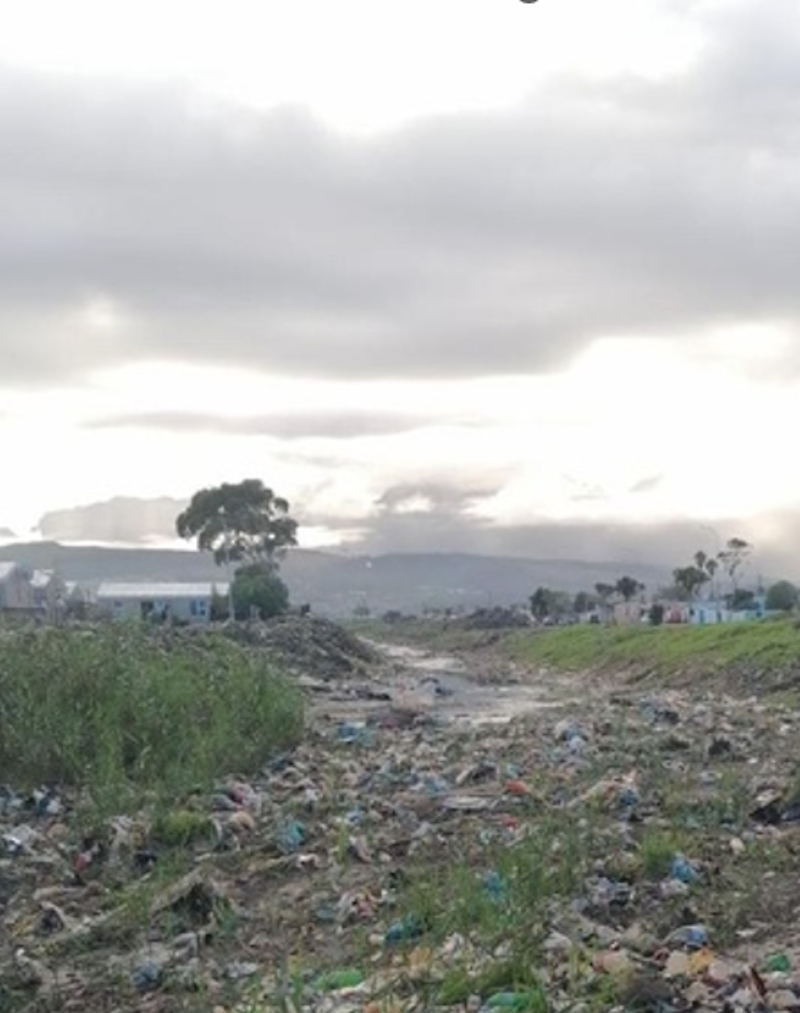
Years of illegal dumping, poor water quality and environmental degradation had transformed sections of the Soet River into places that residents avoided rather than valued.
The Soet River in Strand reflects many of the challenges facing urban waterways across South Africa. Years of illegal dumping, poor water quality and environmental degradation had transformed sections of the river into places that residents avoided rather than valued. Yet over the past two years, a growing partnership facilitated by the Economic Development Partnership between local residents, the City of Cape Town and community organisations has begun to change that narrative.
Supported through the City of Cape Town’s Water Partnership Grants Programme, the Soet River Catchment Management Forum implemented a project that combined environmental rehabilitation with community education, local employment and practical waste-management infrastructure. Massive amounts of waste were removed from the river and active citizenship and place-based stewardship strengthened both communities and the environments they depend on.
Understanding the Local Context
When the City of Cape Town established the Soet River Catchment Management Forum, local resident Dave Walker became involved and was later appointed Chairperson. Over the past two years, the Forum has worked alongside the City, community organisations and residents to improve the health of the river through initiatives like the installation of a litter interceptor, river dredging and, more recently, the Water Partnership grant project. Living close to the river, Dave has witnessed first-hand how environmental degradation affects the surrounding community.
“The water quality was absolutely terrible because it was contaminated upstream and the amount of trash coming down the river was unbearable,” Walker says of the river quality.
The challenge, however, extended beyond pollution alone. Through ongoing engagement with residents, the Catchment Management Forum came to understand that illegal dumping was often linked to everyday realities: wheelie bins that were frequently stolen before collection day, households having limited space to store refuse and waste left outside overnight torn open by stray animals.
These realities highlighted an important lesson. While enforcement remains essential, sustainable environmental management also requires practical solutions that respond to how people actually live.
Rather than treating illegal dumping simply as a behavioural issue, the project sought to understand its underlying causes before introducing interventions that were practical, locally appropriate and easy for residents to use.
A Different Approach to River Stewardship
The Water Partnership grant enabled the Soet River Catchment Management Forum to implement three complementary interventions: rehabilitating a degraded section of the river through indigenous planting, installing a purpose-built litter cage to improve waste disposal, and employing three local River Rangers to care for the river and engage the community. The River Rangers are local residents employed to help maintain and monitor the river, while also engaging and educating their community about responsible waste disposal and environmental care.
What made this approach unique was that the focus was not on environmental restoration as a once-off clean-up exercise, but rather that the project sought to build the long-term relationships, local leadership and practical systems needed to support ongoing stewardship of the Soet River.

The Water Partnership grant enabled the Soet River Catchment Management Forum to implement three complementary interventions: rehabilitating a degraded section of the river through indigenous planting, installing a purpose-built litter cage to improve waste disposal, and employing three local River Rangers to care for the river and engage the community.
The River Rangers quickly became central to the project’s success. Beyond maintaining the river, they educated residents, monitored illegal dumping, promoted the use of the litter cage and worked alongside law enforcement to encourage responsible waste management. By the end of the project, they had removed approximately 11,000 bags of waste from the river and surrounding area, together with around four tonnes of tyres and other bulky waste.
For Dave, however, the project’s success is measured by more than the volume of waste collected. “People respect them [the River Rangers] because they live here. They know the community, and the community knows them.” The project successfully secured the lasting environmental stewardship dependent on infrastructure and on empowering local people to care for the places they know best.
Stewardship Begins With Local People
For River Ranger Ismail Latief, this project was deeply personal. “I live very close to the river, so this place is important to me. There are birds, animals and indigenous plants that depend on this environment.”
Living alongside the river has given Ismail strong relationships within the community. Rather than relying on confrontation, the River Rangers focus on education, encouraging residents to dispose of waste responsibly while working closely with law enforcement to address persistent illegal dumping.
“We approach people respectfully. We explain why what they are doing is harmful and encourage them to dispose of their waste properly. We don’t want conflict; we want people to understand why protecting the environment matters.”
For Ismail, the work extends beyond environmental management. “It’s not only about me; it’s about the entire community.”
That sense of ownership has become one of the defining features of the project. Rather than positioning residents as beneficiaries of environmental improvements, the initiative has enabled them to become active participants in creating, driving and sustaining those improvements.
From Infrastructure to Behaviour Change
The litter cage has become the project’s most visible intervention and a visible reminder to encourage behavioural changes. Residents now use the cage regularly, organise waste to make space for others and increasingly discourage illegal dumping. For Dave, the turning point came when he watched one resident stop another from carelessly throwing rubbish against the cage because they did not want it damaged.
“If you have a clean neighbourhood, people look after things,” he reflects. The same shift has taken place beyond the riverbank. The River Rangers restored a neglected park that had become unsafe due to illegal dumping and broken glass. Today, children have returned to play there.
“The litter cage has made a huge difference,” says Ismail. “The community is using it, the park is much cleaner and children can play there again.”
These changes suggest that when community members are part of the visible improvements in their environments, they are more likely to take ownership of the spaces they share. The project demonstrates that practical infrastructure, combined with consistent community engagement, can become a catalyst for active citizenship and long-term stewardship.
Partnership as an enabler
The Soet River project demonstrates that community stewardship cannot be achieved by one organisation alone. The initiative was convened by the EDP and brought together the Soet River Catchment Management Forum, the City of Cape Town, Plastics SA, Greenways Golf Estate, the Litterboom Project, local law enforcement, Expanded Public Works Programme (EPWP) teams and community organisations. Each partner contributed different resources, expertise and operational support, demonstrating that restoring urban rivers requires collaboration across sectors.
Importantly, the project positioned local residents as equal, active partners in maintaining infrastructure, educating neighbours and strengthening relationships between the community and public institutions. Reflecting on the project’s influence, Dave acknowledges the team’s impact. “All I did was coordinate it. The guys on the ground made the success.”
The lessons along one stretch of river in Strand are applicable well beyond a single local community. The project demonstrates that successful river stewardship depends on three connected principles: understanding local realities, equipping communities to lead, and building partnerships that combine practical infrastructure with long-term community engagement.
Together, these elements show that environmental restoration is not simply about cleaning rivers. It is about strengthening relationships between people and the places they share while creating communities that are better equipped to care for their local environment.

The recovering river is a sign of a system where collaboration is having an impact on people’s daily lives.
Looking ahead
The Soet River has not been fully restored, and significant work remains. Continued maintenance, ongoing education and sustained collaboration will be essential if progress is to continue. Yet the project offers an encouraging example of what can happen when communities are trusted to lead, practical solutions respond to local realities and partnerships provide long-term support.
The clean-up of large amounts of waste speak to the scale of the environmental challenge and why this work must be sustained through partnerships. Children returning to a once-neglected park, neighbours encouraging one another to use the litter cage, residents taking greater pride in their surroundings, and local champions continuing to care for the river beyond the life of the grant. These are signs of a system where collaboration is having an impact on people’s daily lives.
For Dave, however, one moment captured the project’s success better than any statistic. “The best day I’ve had here at the river was when I heard frogs for the first time.” For a river that had become synonymous with pollution and neglect, the singing of frogs heralded something far greater: an ecosystem in recovery.
Editing: Natalie Tannous
This blog post is subject to the following disclaimer.